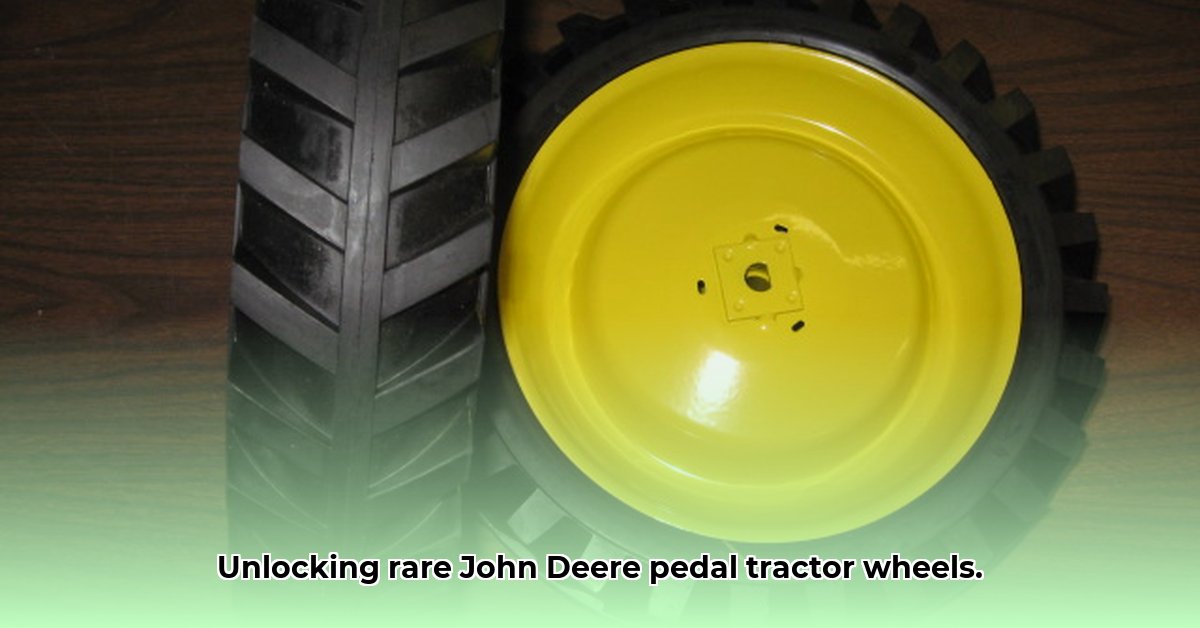
Tracking down the right wheels for your vintage John Deere pedal tractor can be a challenging but rewarding endeavor. This guide provides a comprehensive strategy for locating, evaluating, and acquiring these highly sought-after parts. Whether you're a seasoned collector or a novice restorer, this guide will equip you with the knowledge and resources to successfully complete your project. For more resources, check out this helpful pedal tractor guide.
Understanding the Market for John Deere Pedal Tractor Wheels
The market for vintage John Deere pedal tractor wheels is a dynamic one, characterized by limited supply and significant demand. This scarcity drives price fluctuations, making informed sourcing crucial. Prices vary widely based on several factors, including the tractor model, wheel size, condition, and authenticity. Original, pristine wheels, especially those bearing the John Deere logo, command the highest prices. Think of it like the collectible car market; condition is king.
A key factor influencing value is the rarity of specific wheel types and sizes. Certain models and years produced far fewer tractors, resulting in a lower supply of corresponding parts. This scarcity naturally drives up the value of these highly sought-after items. Researching production numbers for your specific tractor model can provide valuable insight into the rarity of its associated wheels. Do you know the production year of your tractor? This information significantly impacts your search.
Identifying the Correct Wheels for Your Tractor
Begin by accurately identifying your John Deere pedal tractor model. This crucial step ensures you acquire the correct wheel size and type. Consult your owner's manual (if available), online forums dedicated to vintage tractors (like [insert relevant forum link]), or restoration guides. Note the model number, wheel diameter, and any other distinguishing features. Cross-referencing these details with online resources will aid in precise identification. Take detailed measurements, and remember to photograph your current wheels (if any) to use for comparison.
Sourcing John Deere Pedal Tractor Wheels: A Multi-Pronged Approach
The search for rare John Deere pedal tractor wheels demands a multifaceted strategy. Exploring multiple avenues simultaneously increases your chances of success.
1. Online Marketplaces (e.g., eBay): These platforms offer an extensive selection, but caution is advised. Carefully examine seller ratings, scrutinize photographs for signs of damage, and read reviews. Remember that shipping costs can significantly impact the overall price, and, unfortunately, even these established platforms have their share of counterfeit items.
2. Specialized Toy Part Retailers: Several online and brick-and-mortar retailers specialize in vintage toy parts, including John Deere pedal tractor components. While often more expensive, these vendors often offer a higher level of assurance regarding authenticity and condition. Contacting several such retailers allows you to compare prices and inventory.
3. Collector Clubs and Forums: Joining online forums or local collector clubs provides access to a community of enthusiasts who often share information about available parts or even sell from personal collections. This peer-to-peer network is invaluable for finding rare or hard-to-locate items.
4. Flea Markets and Antique Shops: These less predictable sources can yield surprising results. Dedicated treasure hunting requires patience and a keen eye for detail, but the potential for discovering unique or undervalued items is significant.
Assessing Wheel Condition and Value: A Detailed Examination
Before purchasing, always perform a thorough inspection:
- Authenticity: Verify the wheels are genuine John Deere parts. Check for manufacturer markings or logos.
- Condition: Assess the overall condition, noting any rust, cracks, dents, or missing paint. The presence of original paint and accessories dramatically boosts the value.
- Tires: If applicable, assess the condition of the tires. Original tires significantly enhance value, whereas replacements detract from it.
A simple condition rating system (e.g., Excellent, Good, Fair, Poor) can be used for comparison. Utilize completed auction listings on online marketplaces as a price benchmark, remembering that prices vary based on the factors listed above.
Installation and Maintenance (Optional)
Installing the wheels typically involves straightforward mechanical processes. However, if you lack experience, consult a qualified mechanic or refer to repair manuals specific to your tractor model. Regular cleaning and lubrication will prolong the lifespan of your wheels and maintain their appearance.
Conclusion:
Finding the perfect John Deere pedal tractor wheels requires patience, research, and a strategic approach. By understanding the market, carefully identifying your needs, and utilizing multiple sourcing strategies, you significantly increase your chances of finding the right wheels to complete your restoration project. Remember, the thrill of the hunt is part of the journey!